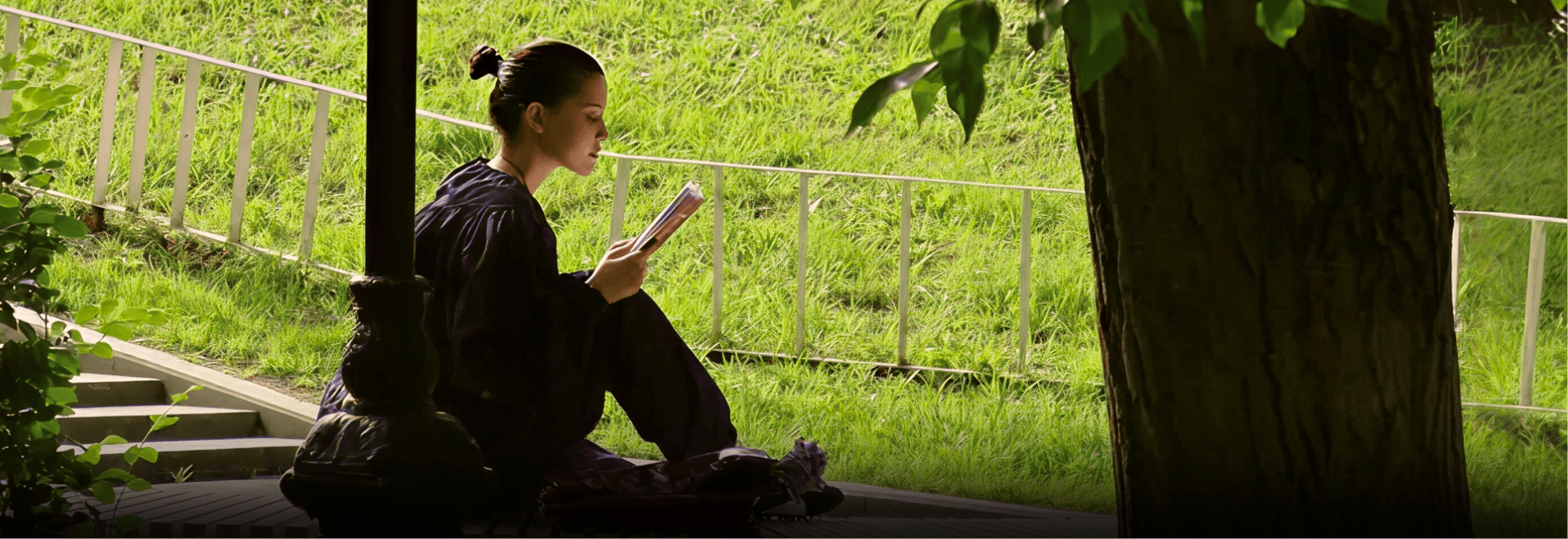
Maya had told the same thing to enough people that she had stopped noticing she was telling it. She liked being alone. She was good at her own company. She was not one of those people who needed a full calendar to feel all right. It came out easily at dinners, at work, whenever someone expressed the mild concern people express about a woman in her mid-thirties who spends most weekends by herself. I actually love it, she would say, and they would nod, a little envious, and move on.
She had believed it too. That was the thing. It was not a lie she told other people. It was a description she had accepted about herself, worn smooth from use, and had never once held up to the light.
On a grey Sunday in the middle of July, for no reason she could name, she held it up to the light.
It started with a small, uncomfortable noticing. She had woken with no plans, which was normal, and felt the familiar first flush of relief at the empty day, which was also normal. But underneath the relief, this time, she caught something else, quieter and less comfortable. A flatness. A faint bracing, as though the day were something to get through rather than something to enjoy. And she thought, standing at the kettle: is this what liking it feels like, or have I just got very good at not minding it?
So she decided, half seriously, to test it. To pay honest attention, for one day, to whether the solitude she had built an identity around was something she chose or something she had settled into.
She started with a simple question, the one she had been avoiding without knowing it. When her phone buzzed mid-morning, a friend asking on a whim whether she wanted to come to lunch, she watched her own reaction closely instead of reacting on autopilot. Her instant reflex was to decline, and she noted, with some discomfort, that the reflex arrived before any actual weighing of whether she wanted to go. The no was automatic. It was not a preference. It was a habit wearing the costume of a preference.
She made herself sit with the invitation instead of answering it. And when she was honest, under the reflexive no, she found something that genuinely surprised her: she wanted to go. Not desperately. But the thought of the lunch, the noise of a busy cafe, her friend's particular laugh, produced a small lift she had trained herself not to notice, because noticing it would have meant admitting that the solitude was not always the thing she wanted most.
She went to the lunch. That was part of the test too, doing the thing the honest answer pointed toward rather than the thing the habit pointed toward. And the lunch was good in the specific way that being genuinely known is good. Her friend remembered a thing she had mentioned weeks ago and asked how it had turned out. Someone laughed at something she said. She came home in the late afternoon carrying a warmth that her solo Sundays, she now admitted, did not generate. They maintained her. They did not warm her.
What she understood, sitting in her quiet flat that evening, was not that she disliked being alone. She did like it, some of it, genuinely. The problem was that she had let a genuine capacity for solitude harden into a wall against connection, and had called the wall a preference because that was easier than the alternative. The alternative meant admitting she was a little lonely, and that admitting it would require doing something about it, and that doing something about it meant risk, effort, the possibility of reaching out and being an imposition.
Being good at your own company is a real and worthwhile thing. But she saw now that it had quietly become her defence against the harder, more exposing work of letting people close. Somewhere along the way, chosen solitude had drifted into something more like quiet resignation, and from the inside the two had felt almost identical. The difference, she realised, was in the answer to a single question: if an invitation came, would it feel like a gift or an intrusion? For a long time she had been answering intrusion out of reflex, and calling that peace.
She did not overhaul her life that Sunday. She did one small thing. She texted her friend to say thank you, that had been exactly what she needed, could they do it again soon. And she felt, as she sent it, the specific vulnerability of having admitted a need out loud. It was uncomfortable. It was also, she thought, probably the most honest thing she had done in months.
The solitude was not the enemy. It never had been. But she wanted, from now on, to be able to tell the difference between the quiet she chose and the quiet she was hiding in. That difference, she suspected, was going to matter more than almost anything else.
Knowing the difference
The line Maya found, between solitude that restores and isolation that quietly costs, is one many people never stop to check. KanYini Earth's wellbeing courses are built to help people notice it and to rebuild genuine connection. Explore KanYini Learn, or find other ways to be part of the movement, from volunteering to sharing this with someone it might reach, at get involved.
Walk with KanYini Earth.