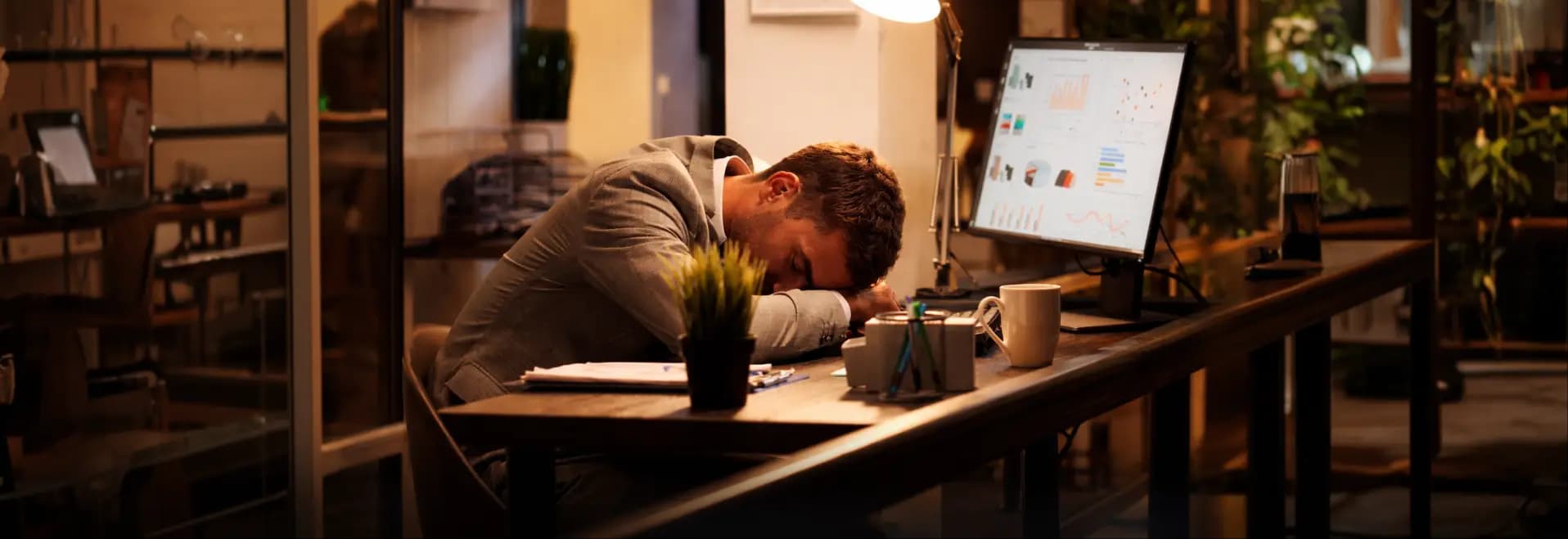
What people mean when they say "anxiety breakdown"
There is no clinical diagnosis called an anxiety breakdown. You will not find it in the DSM-5. No psychologist will write it on a referral.
But the experience it describes is immediately recognisable. It is the moment when the anxiety you have been carrying, sometimes for weeks, sometimes for months, exceeds your capacity to manage it. Your usual coping mechanisms stop working. The deep breath does not land. The "just push through" voice in your head goes quiet. You are overwhelmed in a way that feels different from ordinary stress because it feels total. Like every system is failing at once.
People describe it in different ways. "I just shut down." "I could not think straight." "My body stopped cooperating." "I felt like I was going to pass out but I was not actually going to pass out." What they are describing is the point at which accumulated nervousness and emotional strain cross a threshold and become a full-body experience.
The emotional signs of stress most people recognise
These are the signs and symptoms of nervousness and stress that most people can name, even if they do not always connect them to anxiety: persistent worry that feels disproportionate to the situation, difficulty concentrating or making decisions, irritability that arrives without a clear trigger, feeling on edge or restless without being able to say why, a sense of impending doom that has no identifiable cause, emotional numbness or flatness, and the feeling of being unable to cope with tasks that would normally be manageable.
Most people experience several of these before reaching the breakdown point. The trouble is that each one, in isolation, feels manageable. It is the accumulation that overwhelms. And because each individual symptom is tolerable, people often do not recognise they are approaching a threshold until they have already crossed it.
The physical symptoms of nervousness and stress that get missed
This is where it gets important. Anxiety is not just an emotional experience. It is a physiological one. When your nervous system perceives sustained threat, whether the threat is a deadline, a relationship conflict, the systemic weight of financial hardship, or simply the relentless pace of modern life, it activates the same fight-or-flight response that evolved to protect you from physical danger. That response produces real, measurable physical symptoms.
Chest tightness and shortness of breath
One of the most common and most frightening physical symptoms of stress. Your chest feels tight. Your breath feels shallow. You may feel like you cannot get a full lungful of air. This is your diaphragm tensing as part of the fight-or-flight response. It is not dangerous, but it often mimics the sensation of a heart attack, which creates a feedback loop of more anxiety.
Digestive problems
The gut-brain connection is well-established. Chronic stress disrupts digestion, leading to nausea, stomach cramps, bloating, diarrhoea, or loss of appetite. Many people experiencing sustained anxiety report digestive issues weeks before they recognise the emotional symptoms. The body often speaks first.
Muscle tension and pain
Jaw clenching. Shoulder pain. Neck stiffness. Lower back ache. Tension headaches that arrive every afternoon. When your nervous system is in sustained alert mode, your muscles contract and do not fully release. Over time, this creates chronic pain that most people attribute to posture or ergonomics rather than stress.
Exhaustion that sleep does not fix
You sleep seven or eight hours and wake up feeling like you did not sleep at all. This is not a sleep problem. It is a nervous system problem. When your body is in sustained fight-or-flight mode, it does not enter deep restorative sleep efficiently. You are unconscious for eight hours, but your system never fully stands down. The result is a kind of bone-deep tiredness that no amount of rest seems to touch; often one of the earliest signs of burnout at work.
Heart palpitations and elevated heart rate
Your heart races or pounds for no apparent reason. You feel it in your chest, your throat, sometimes your ears. This is adrenaline. Your body is preparing for a threat that does not exist in the physical world, but the preparation is real. Palpitations are almost always harmless in the context of anxiety, but they are deeply unsettling, which perpetuates the cycle.
Why the physical signs matter
Most people do not go to a doctor and say "I think I am having an anxiety breakdown." They say "I have chest pain" or "my stomach has been off for weeks" or "I cannot sleep" or "I have headaches every day." They present physical symptoms because that is what they are experiencing. The emotional dimension, the sustained worry, the sense of overwhelm, the creeping dread, is often invisible to them because it has been building so gradually that it feels normal.
Recognising that physical symptoms can be expressions of accumulated stress is not about self-diagnosing. It is about intervening earlier. If you know that the tension in your jaw, the knot in your stomach, and the exhaustion that will not lift are your body's way of saying "I am carrying too much," you can respond before you reach the breakdown point.
What actually helps (beyond the breathing exercises)
The standard advice for managing anxiety symptoms, deep breathing, grounding techniques, progressive muscle relaxation, is genuinely useful in the moment. These techniques activate the parasympathetic nervous system and can reduce acute symptoms within minutes.
But if the anxiety keeps returning, the question is not how to manage it. It is what is feeding it.
Audit what you are carrying
Most people reaching the breakdown point are carrying more than they realise. Not just workload. Emotional labour. Unspoken frustrations. Relationships where they perform fine while feeling anything but. Responsibilities they took on because nobody else would. Write it down. All of it. The act of seeing it on paper often reveals why the body is protesting.
Tell someone what is actually going on
Anxiety thrives in silence. The less you tell anyone, the bigger it gets. You do not need to explain everything. "I am really struggling at the moment" is enough. The sentence breaks the isolation that anxiety feeds on. One honest conversation with one person who listens can reduce the intensity of anxiety more effectively than any technique you do alone.
Reduce the performance
A significant driver of sustained anxiety is the gap between how you feel and how you present. Performing "fine" when you are not fine is exhausting, and the effort of maintaining the performance adds to the load your nervous system is already carrying. The more places in your life where you can stop performing, even partially, the less fuel the anxiety has.
When to seek professional support
If anxiety symptoms are persistent (lasting more than two weeks), if they are interfering with your ability to work, sleep, or maintain relationships, or if you are experiencing panic attacks, intrusive thoughts, or a sense that you cannot cope, it is worth speaking to a GP or mental health professional. Anxiety is highly treatable. You do not need to wait until it becomes a crisis to ask for help starting with basic mental health safety planning can be a powerful first step.
And if you are reading this because you noticed these symptoms in someone else, that noticing matters. Sometimes the most powerful thing you can do is not offer advice. It is to say: "I have noticed you seem like you are carrying a lot. You do not have to explain. I just want you to know I see you."
How KanYini Earth is closing the gap
KanYini Earth is an Australian not-for-profit building twelve clinically reviewed wellbeing courses, priced at a fraction of what currently exists, designed to reach people who would never otherwise access structured support. The learning programmes teach ordinary people how to notice when someone around them is struggling and respond with confidence.
Every contribution goes directly into building these programmes. A contribution of $5 helps someone discover a wellbeing resource they did not know existed. $156 gives one person full access to a complete course. And a reshare reaches 200 more people and costs nothing at all.
Walk with KanYini Earth.
References
Safe Work Australia. (2022). Model Code of Practice: Managing psychosocial hazards at work.